Why it matters
A pregnancy runs for months across many visits and several teams. The risks that matter, such as raised blood pressure, protein in the urine or a change in fetal heart rate, are easy to miss when each visit is a separate note.
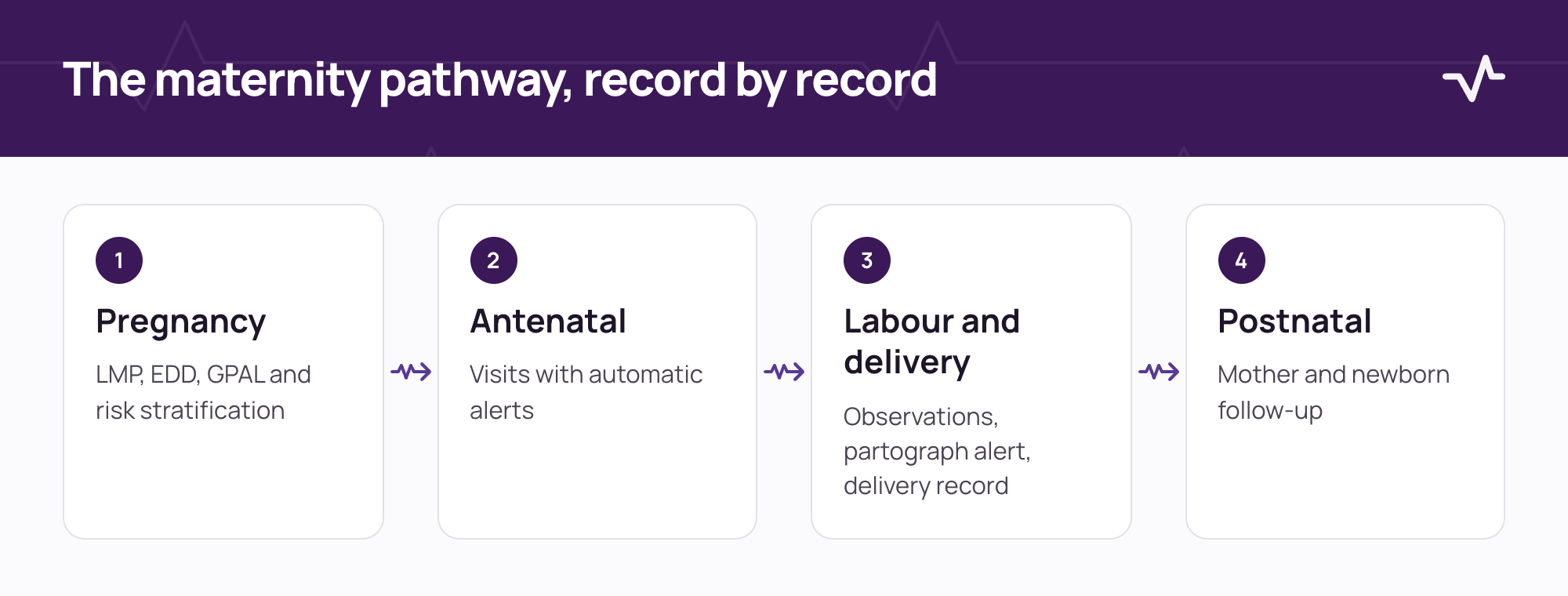
The Ventrecs maternity module follows the pregnancy as one episode. Each antenatal visit is checked against alert thresholds, labour is recorded with a partograph advisory, and the delivery and postnatal care stay linked to the same episode.
- Pregnancy episode with LMP, EDD, GPAL and risk stratification
- Antenatal visits with alerts
- Labour observations with a partograph advisory alert
- Delivery record and postnatal visits linked to the newborn
What it does
Pregnancy episode
The episode holds what every later visit refers to.
- Last menstrual period, expected delivery date and GPAL
- Risk stratification recorded on the episode
- Linked to the patient's history, allergies and orders
Antenatal visits
Each visit is checked as it is entered.
- Alerts for hypertension, proteinuria, fetal heart rate, fundal height and danger symptoms
- Urgent alerts create an activity for the user
- Results from the laboratory and imaging on the same chart
Labour and delivery
Observations are recorded in the sequence they happen.
- Labour observations with a partograph advisory alert
- A delivery record with a postpartum haemorrhage threshold by mode of delivery
- Newborn records created and linked from the delivery
Postnatal care
Follow-up covers the mother and the baby.
- Postnatal visits with fever, lochia and depression-screen checks
- Newborn growth and immunisation in the paediatrics module
- Signed discharge summary from the documents module
Built-in safeguards
Questions we are asked
Does it support the whole pathway?
It covers the pregnancy episode, antenatal visits, labour observations, the delivery record and postnatal visits. Each stage links to the same episode and to the newborn record.
Who approves the alert thresholds?
Your clinical governance team. The thresholds are reviewed before go-live, and changes are made as a recorded configuration change.
Is the newborn record separate?
The newborn has its own record in the paediatrics module, linked to the delivery. It carries APGAR, gestation and birth-weight categories.
Can an obstetric unit use it with the bed board?
Yes. Maternity wards appear on the same live bed board as the rest of the hospital.
Talk to us about your setup
Tell us about your facility and current systems. We will reply within one working day.