Skip to Content

Hospital information system for hospital groups

Replace a legacy system in phases: clinical record, laboratory, imaging, pharmacy, beds, theatre and billing, on one record.

Hospital groups

A phased roadmap

An illustrative order. Yours is agreed in a discovery workshop, department by department.

Existing system, connectedLive on Ventrecs
Department1 · Connect2 · First departments3 · Clinical core4 · Billing and groups
Laboratory
Existing system, connected
Live on Ventrecs
Live on Ventrecs
Live on Ventrecs
Pharmacy
Existing system, connected
Live on Ventrecs
Live on Ventrecs
Live on Ventrecs
Imaging
Existing system, connected
Live on Ventrecs
Live on Ventrecs
Registration and ADT
Existing system, connected
Live on Ventrecs
Live on Ventrecs
Beds and theatre
Existing system, connected
Live on Ventrecs
Billing and claims
Existing system, connected
Live on Ventrecs

What gets in the way

A hospital cannot stop while its system changes. Departments work around the legacy HIS, laboratory, imaging and pharmacy sit on different vendors, and bed, theatre and billing figures do not match.

Ventrecs is built to be introduced in phases. You keep what works and connect it, move one department at a time, and retire the old system only when each department has signed off.

Typical challenges
  • A legacy HIS that departments work around
  • Laboratory, imaging and pharmacy on separate vendors
  • Bed, theatre and billing data that do not reconcile
  • A big-bang replacement the hospital cannot afford to stop for

What has to reconcile

Beds

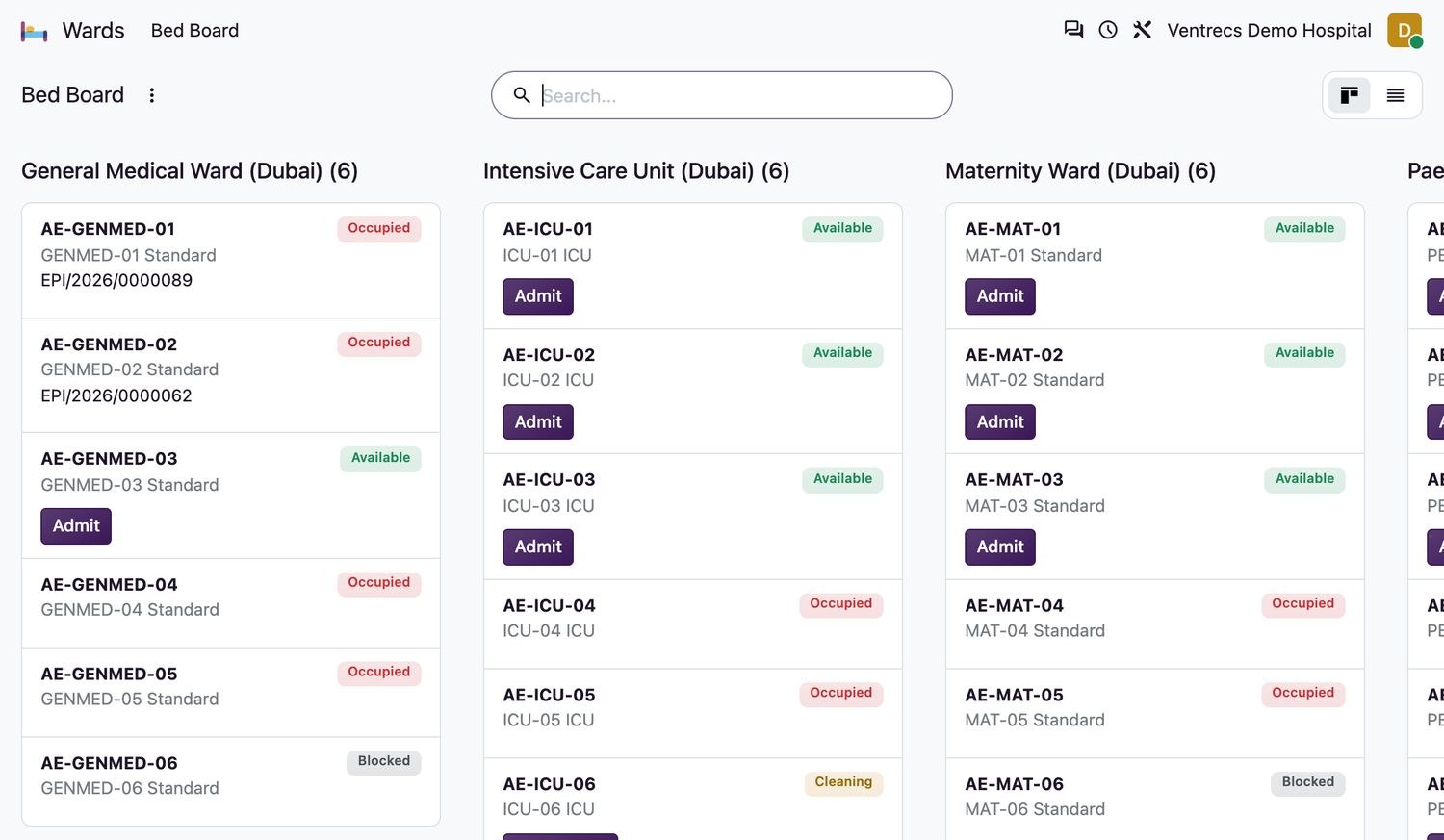
A live bed board with admission and housekeeping from the bed card.

Live bed board in Ventrecs Wards listing beds by ward as available, occupied, blocked or cleaning
The live bed board

Theatre

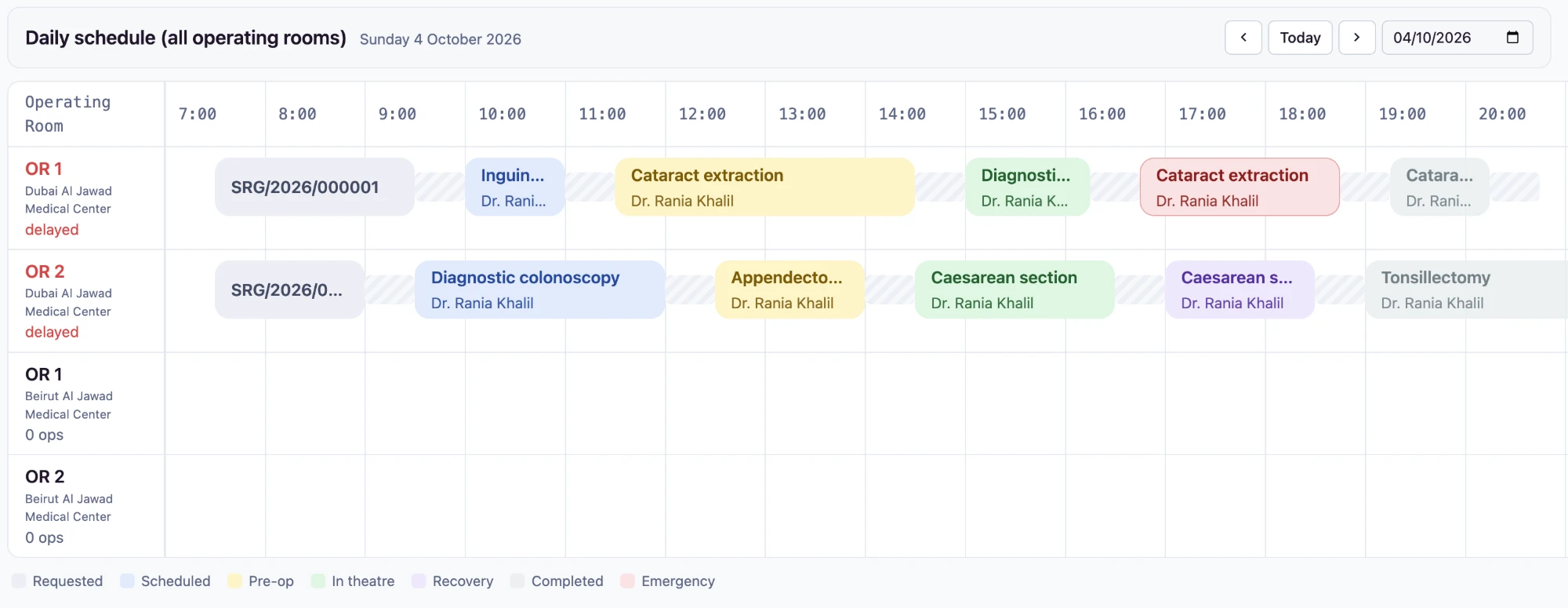
An operating room timeline, with procedures and supplies charged at case completion.

Operating room timeline in Ventrecs Surgery showing the day's cases by operating room
The operating room timeline

Billing

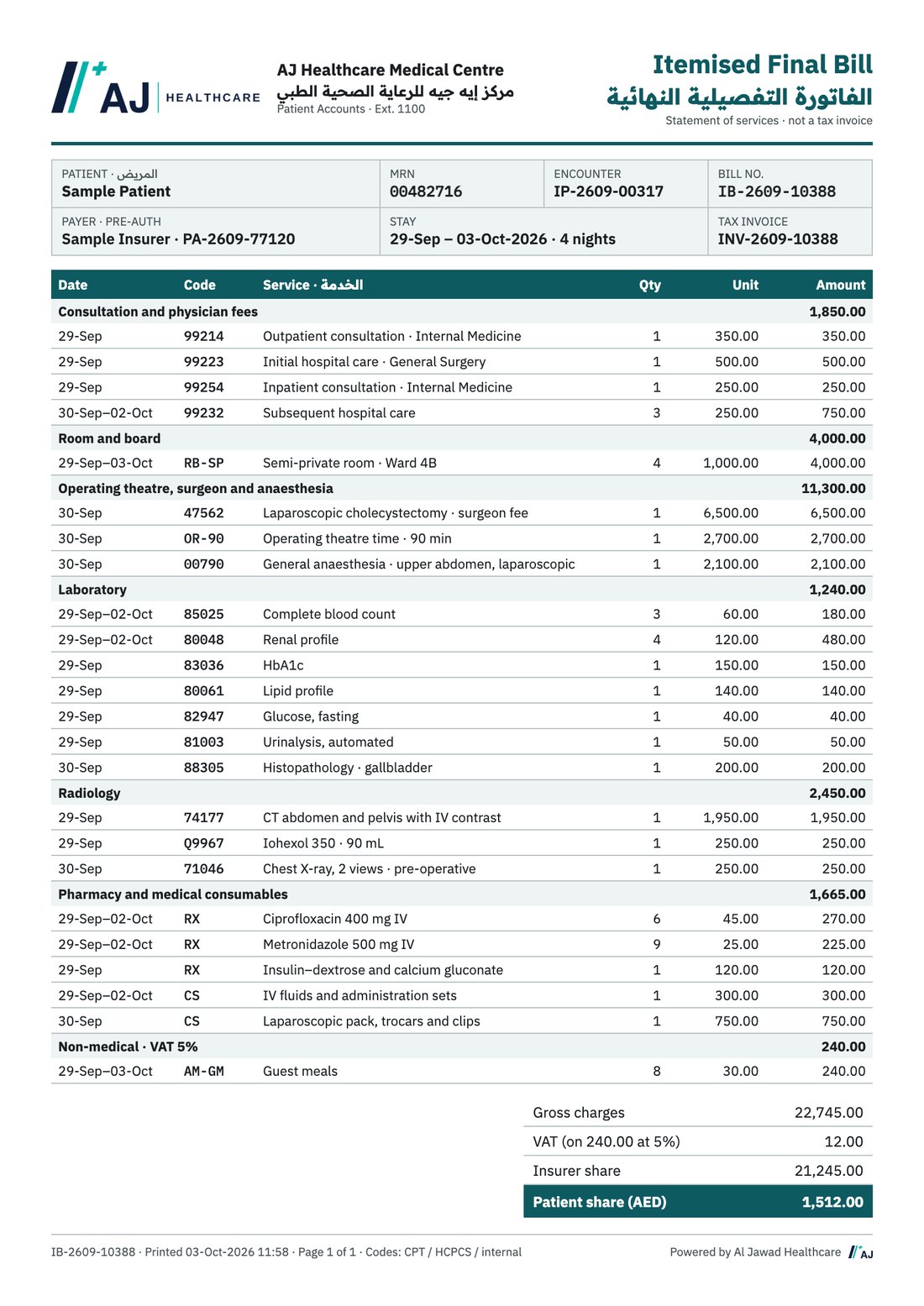
Bed-day charges accrued from the admission, discharge and transfer ledger, and claims built from the same charges.

Printed itemised final bill listing consultations, room, theatre, laboratory, radiology and pharmacy charges
Itemised final bill
Hospital groups

How Ventrecs helps

Phased migration

The first phase is a connection, not a replacement.

  • Existing HIS and departmental systems connected through Ventrecs Connect
  • One department at a time, with parallel running and reconciliation
  • Interfaces scoped, owned and tested before each go-live

One clinical record

Clinicians, nurses and departments write to the same chart.

  • Admission, discharge and transfer, versioned notes, orders and results
  • NEWS2 early warning and barcode-verified medication administration
  • WHO surgical safety checklist as a gate before a case can move on
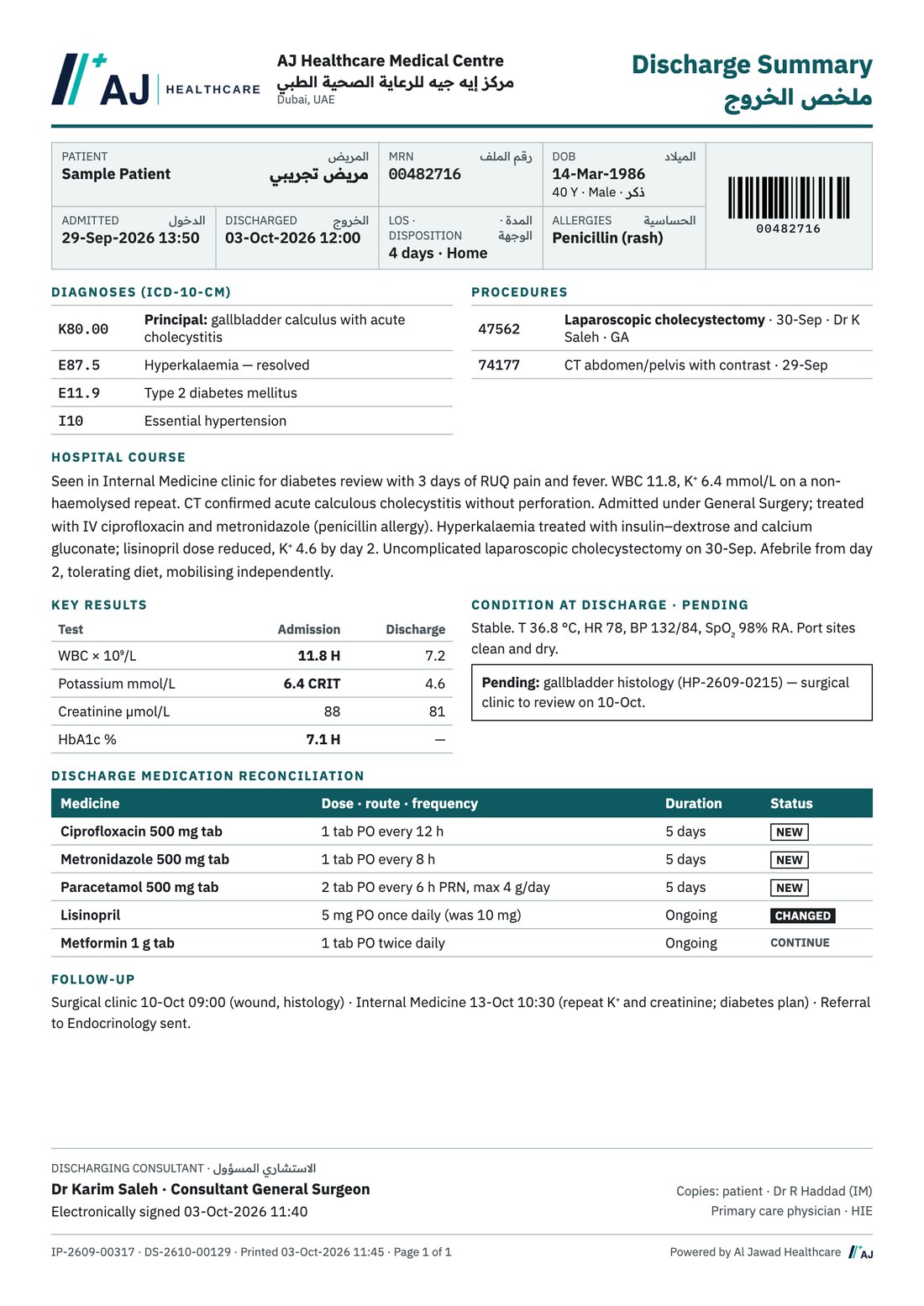
Printed discharge summary with diagnoses, hospital course, results, medication reconciliation and follow-up
Discharge summary
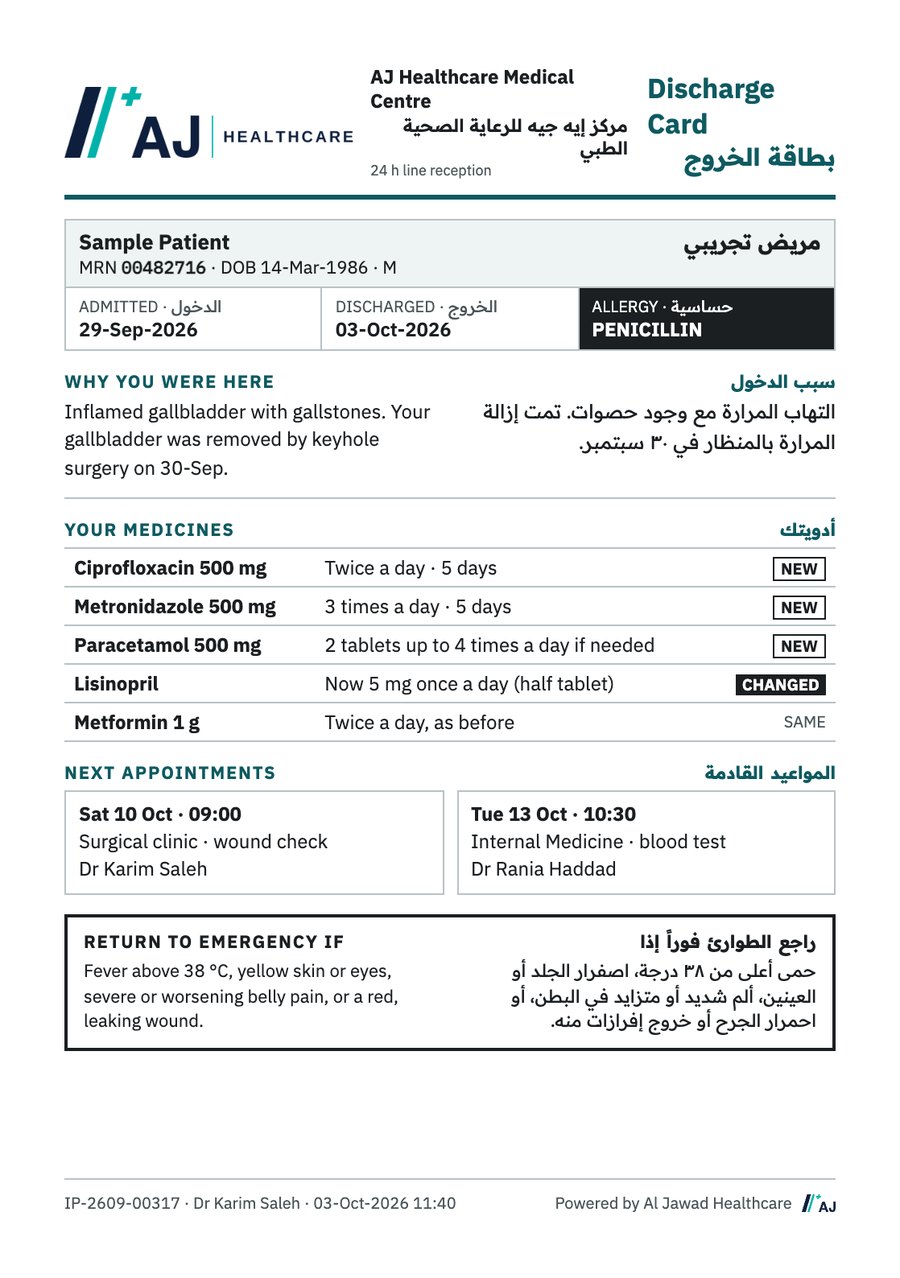
Printed discharge card with medicines, next appointments and when to return to emergency, in English and Arabic
Discharge card
Adult patient wristband with name, record number, allergy banner and barcode
Patient wristband

Laboratory, imaging and pharmacy

Diagnostic and pharmacy departments share the patient record instead of re-keying it.

  • Specimen-to-result flow with critical-result acknowledgement
  • Imaging orders, reconciliation and a viewer opened from the order
  • Dispensing, batch and expiry, and ward eMAR

Beds, theatre and billing that reconcile

The same events drive occupancy and charges.

  • A live bed board with admission and housekeeping from the bed card
  • Bed-day charges accrued from the admission, discharge and transfer ledger
  • Operating room timeline, with performed procedures and used supplies charged at case completion

Payers and claims

Pre-authorisation and claims sit beside the clinical work.

  • Pre-authorisation required for elective surgery
  • Payer pricing, eligibility checks and claims
  • Facility dashboards for occupancy, charges and turnaround

Screens and printouts show synthetic demonstration data and a sample facility.

Integrations commonly required

  • Existing HIS and departmental systems
  • Payers and claims
  • PACS and laboratory instruments

Each connection is scoped, tested and supported per project. Status is agreed with you before go-live. How integrations are delivered →

Hospital groups

Questions we are asked

Do we have to replace our hospital system in one go?

No. Ventrecs is introduced in phases. Existing systems stay connected through Ventrecs Connect while departments move one at a time.

Which department should move first?

It depends on where the pain is. Laboratory, imaging and pharmacy are common first choices because they have clear boundaries. We agree the order in a discovery workshop.

How do bed, theatre and billing data stay consistent?

The same events drive each of them: bed-day charges are accrued from the admission, discharge and transfer ledger, and surgical charges are posted when a case is completed.

How is a migration tested?

Each interface is validated against the partner's test environment, and the new and old systems run in parallel and are reconciled before a department switches.

Talk to us about your setup

Tell us about your facility and current systems. We will reply within one working day.