What dental charting software does
Dental charting software keeps the dental record of a patient: a chart of the teeth, the findings on each tooth and surface, the treatment that is planned, the procedures that were done and the visits still to come. Most products add scheduling and billing and are sold as dental practice management software.
The chart is the centre of it. A dentist reads it to know what has been done to a tooth, and the next dentist reads it years later. That is why what goes onto it, and who may put it there, matters more than how it looks.
The odontogram and tooth numbering
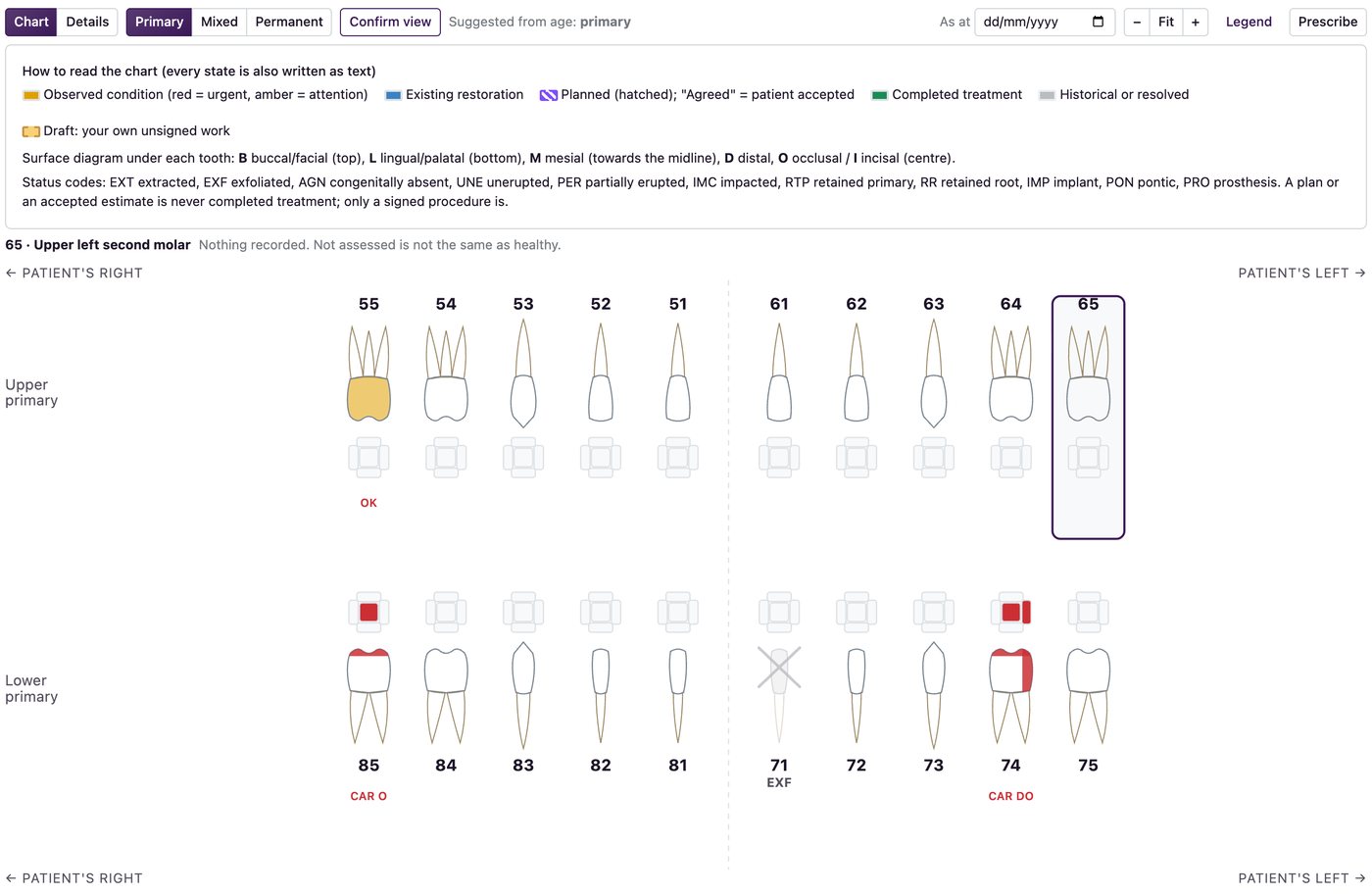
The odontogram is the diagram of the teeth. Teeth are numbered by one of several systems. The FDI two-digit system (ISO 3950) gives each tooth a quadrant digit and a tooth digit, so the upper right first molar is 16. The Universal system numbers permanent teeth 1 to 32, and the Palmer system uses a bracket for the quadrant. A good chart stores one system underneath and shows the one your country uses.
Each tooth also has surfaces: mesial, distal, occlusal or incisal, buccal or facial, and lingual or palatal. A finding on a surface is different from a finding on the whole tooth, so the chart must record the surface. It must also handle primary, mixed and permanent dentition, and a primary tooth that is still present in an adult.
The core functions
- Charting of conditions and existing work. Caries, fractures, restorations, crowns, root canal treatment, implants and missing teeth, by tooth and surface.
- Assessments and findings. A dated examination, with who recorded it and who signed it.
- Treatment plans and estimates. Items by visit, alternatives, a price and the patient's decision.
- Procedures. What was done, to which tooth, with what anaesthesia and materials, and who did it.
- Periodontal charting. Probing depth, recession, bleeding and mobility, compared over time.
- Laboratory work. A prescription to the dental laboratory for a crown, bridge or denture, the order, the receipt and the fitting.
- Recalls and scheduling. The next check-up, and the chair and assistant for each visit.
- Consent, prescriptions and billing. Linked to the same patient, not typed again.
Where the controls matter most
| Step | What the system should enforce | What it prevents |
|---|---|---|
| Charting | Findings are drafts until a dentist signs them, and a signed finding is changed only by an amendment. | A chart edited with no history. |
| Planning | A plan and an accepted estimate are not shown as completed treatment. | Work recorded as done that was only proposed. |
| Irreversible work | Identity, tooth, site and side, allergies, imaging where needed and valid consent are checked before signing. | The wrong tooth, or treatment without consent. |
| Minors | A guardian signs the consent and accepts the plan. | A child's treatment agreed by no one with authority. |
| Laboratory work | The order to the laboratory carries the work and the teeth, not the patient's name, and the receipt is recorded against the order. | A patient's identity sent to an outside company, and a lab bill nobody can match. |
| Charging | A charge follows a signed procedure, or an accepted quotation, not both. | The same work charged twice. |
Questions to ask before you choose one
- Is the chart part of the patient record or a separate one? A second patient record means double entry and mismatched identity.
- Which tooth numbering does it use, and can it show mine? Ask to see the chart with your country's labels.
- What does a signed finding do? Ask to see a correction, and what remains of the original.
- Who may sign? Check that assistants can chart but not sign, and that reception does not see the chart.
- How does a plan become a charge? Ask whether estimates, quotations and invoices agree, and who decides.
- How does it handle children? Look for primary and mixed dentition, and for guardian consent.
- Does it include periodontal charting, or only a field for notes?
- What do I need to configure? Procedure codes, prices, country settings and who approves them.
How Ventrecs Dental approaches it
Ventrecs Dental is a module of the Ventrecs platform. It adds one dental chart to each patient and reuses the patient, visit, consent, diagnosis, pharmacy and billing records that already exist, so it never creates a second patient or a second invoice.
- Anatomical odontogram. FDI numbers are stored, and Universal or Palmer labels are shown by country. The chart suggests primary, mixed or permanent dentition from the age, and the dentist confirms.
- Toolbox and care panels. Pick a tool, click a surface and a tooth. A care panel adds a bundle of plan items, such as a crown package or a hygiene visit, in one click.
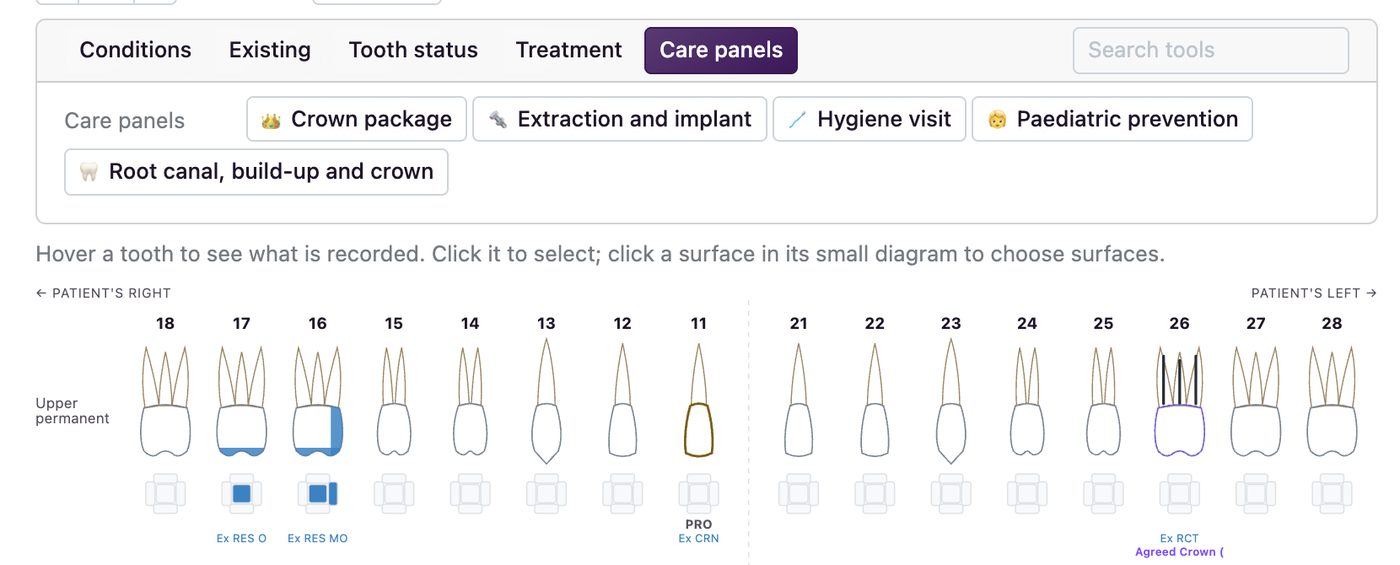
- Signed means final. A signed finding, assessment or procedure cannot be edited or deleted. A correction is a linked amendment, and the original is kept.
- Safety checks. An irreversible procedure cannot be signed without identity, site and side, the allergy and alert review, imaging where required and valid consent.
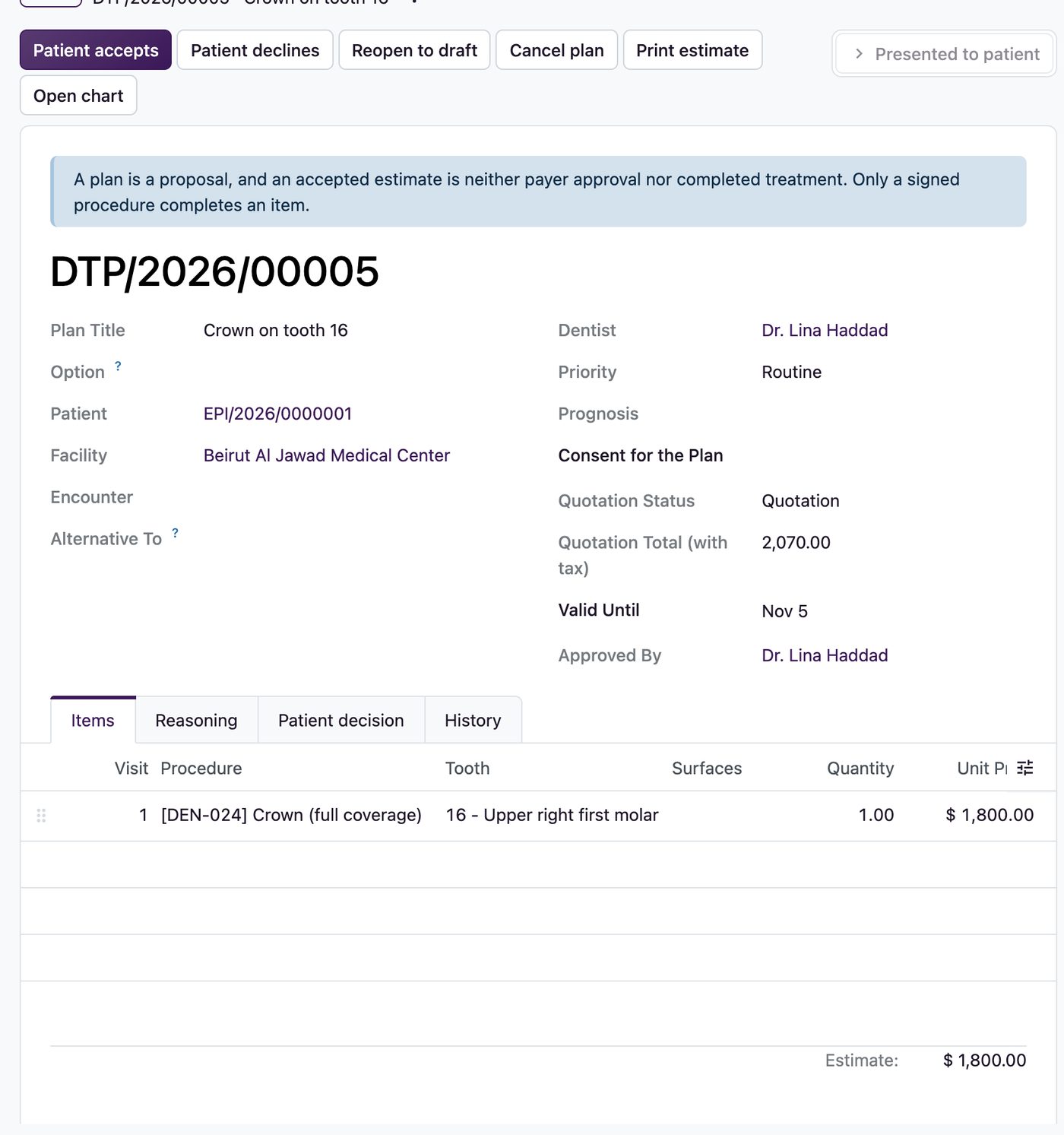
- Plans and quotations. A plan is a proposal. With the quotations module, presenting it creates a Sales quotation, the patient's decision confirms it, and each signed procedure delivers its line.
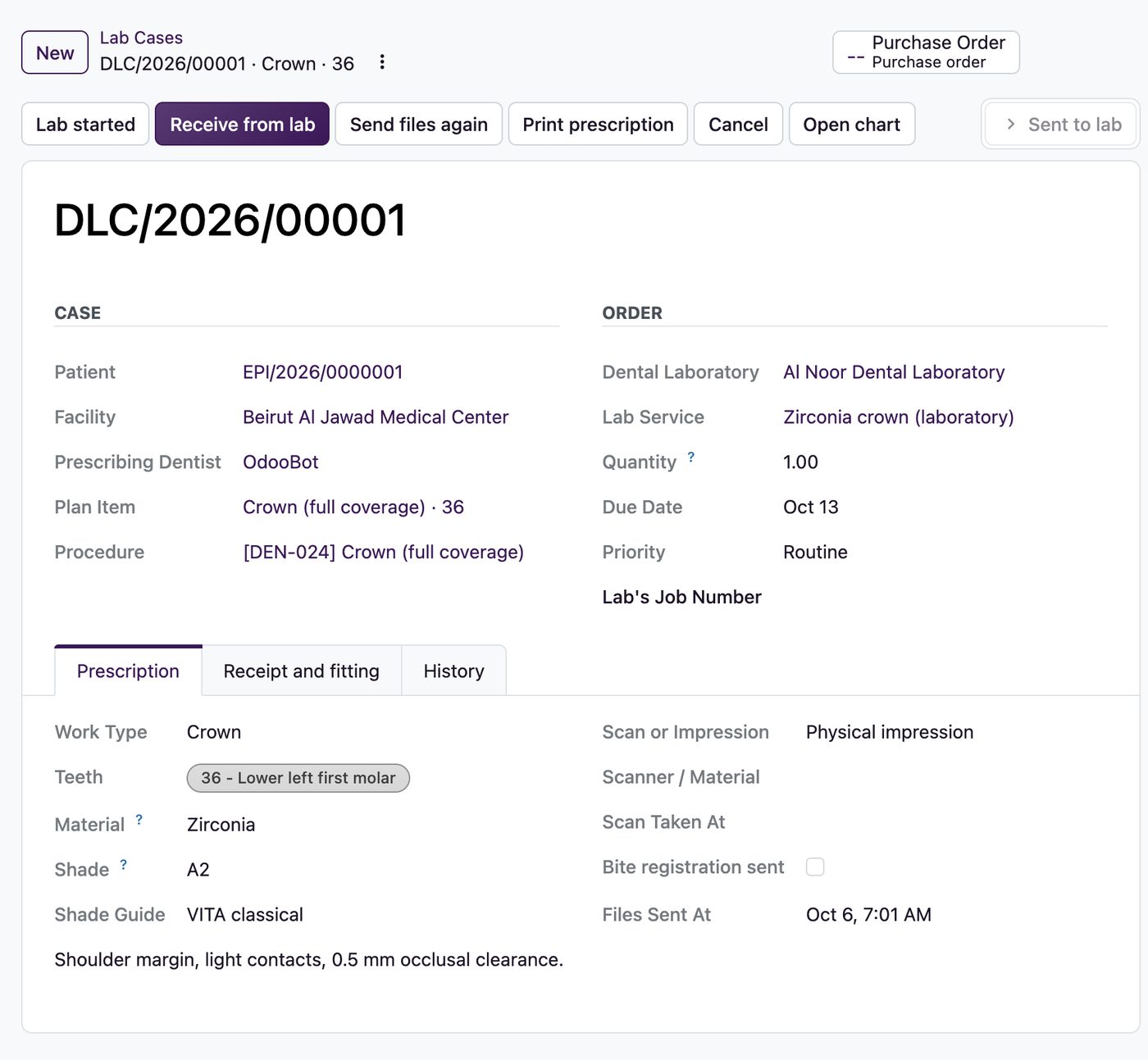
- Laboratory orders. For a crown, bridge or denture, the case starts from the plan item. Sending it creates a purchase order to the laboratory, and the order carries the case number, the work and the teeth, never the patient's name. Receiving the work records the receipt on the order and starts the call to the patient to book the fitting.
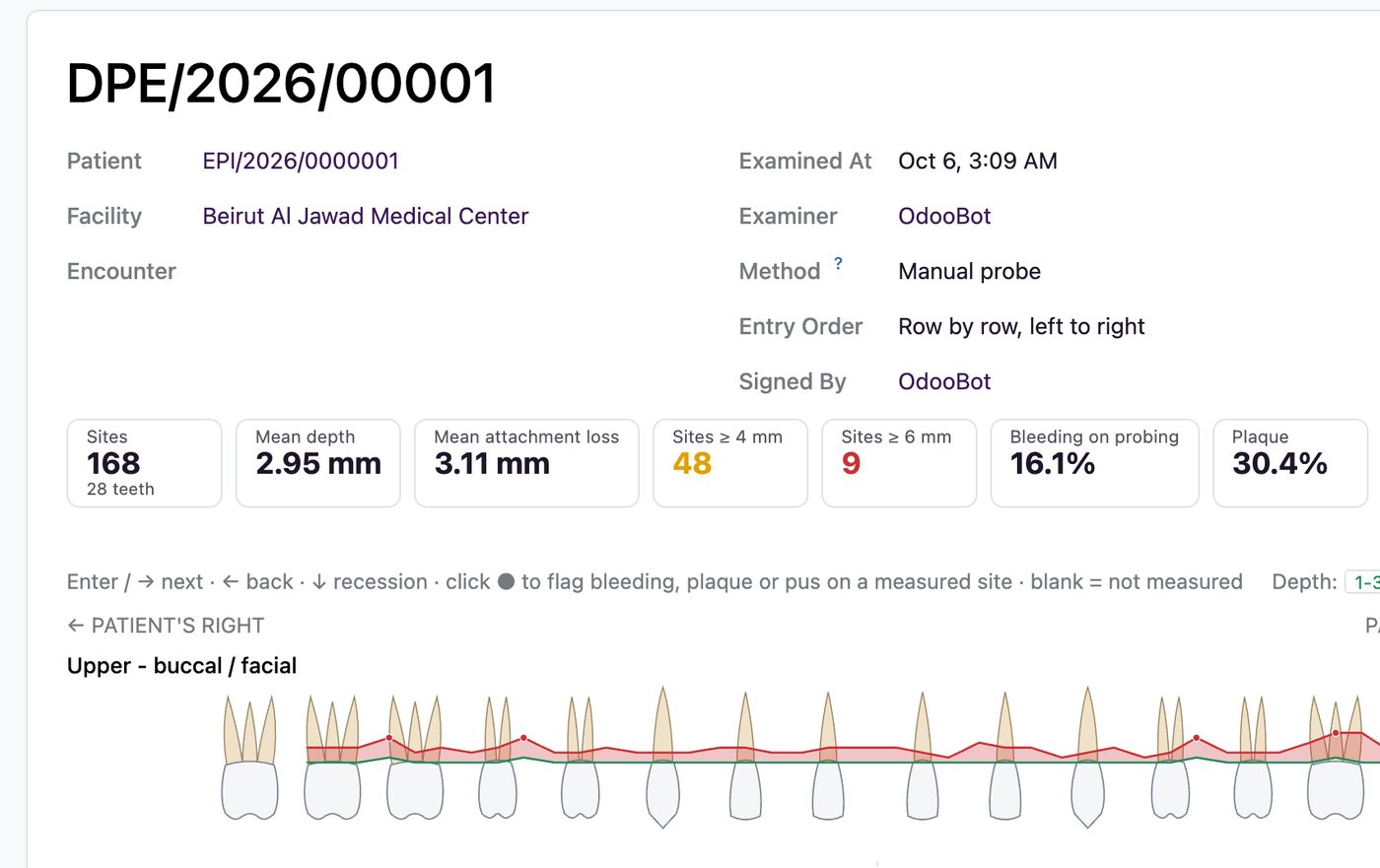
- Periodontal exams. Six sites per tooth, with a live probing graph and comparison with the previous exam. This is an optional module.
- Recalls and chairs. Chair and assistant allocation with setup and turnover time, and recalls with overdue tracking.
Country settings are supplied as draft profiles that your organisation reviews and approves, and licensed procedure code sets are imported by you. See Ventrecs Dental and the Care platform.
Frequently asked questions
What is the difference between dental charting software and dental practice management software?
Charting software records the teeth, findings, plans and procedures. Practice management software adds scheduling, billing and reporting around it. Many products combine both.
What is an odontogram?
A diagram of the teeth on which findings, existing work and planned work are shown by tooth and surface.
What is FDI tooth numbering?
A two-digit system (ISO 3950) in which the first digit is the quadrant and the second is the tooth, so 16 is the upper right first molar. Universal and Palmer are other systems for the same teeth.
Why can a signed dental record not be edited?
A chart is a legal and clinical record. Keeping the original and adding a linked correction shows what was known at each visit.
How does an order to a dental laboratory work?
The dentist prescribes from the plan, the system raises a purchase order to the laboratory with the prescription and files, and the work is received against that order. Receiving it starts the call to the patient to book the fitting.
Should a treatment plan appear as completed work?
No. A plan is a proposal and an accepted estimate is not payer approval. Only a signed procedure completes treatment.
Related Ventrecs pages
- Ventrecs Dental Dental chart, treatment plans, signed procedures and quotations.
- Ventrecs Care Patient identity, encounters and the clinical record.
- Ventrecs Pharmacy Prescriptions, dispensing, stock and POS across branches.
- Insurance and claims Payers, plans, pre-authorisation, eligibility checks and claims.
- Solutions by provider type Medical centres, laboratories, imaging centres, pharmacy groups and hospital networks.
Planning a deployment?
Tell us about your dental clinic or hospital dental department. We can walk through the chart, the plan-to-quote path and the roles you need.
More insights
- Hospital information system RFP checklist: how to evaluate HIS, EMR, LIS, RIS and pharmacy requirements A good RFP asks for evidence, not features. Use this checklist to define scope, requirements, demonstrations and scoring before you issue it.